Department of Mathematics Telegram Channel
| Last update: 2017/05/14 |
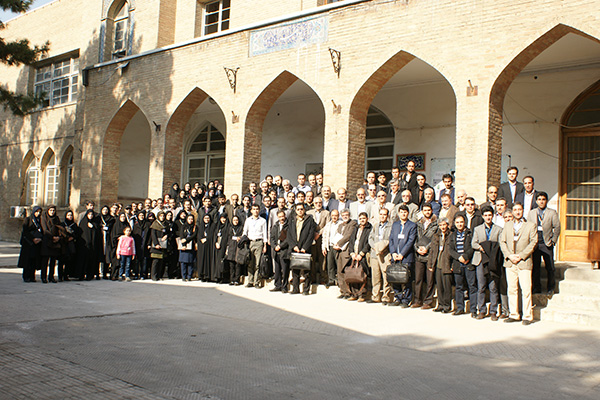
Students of Department of Mathematics can join to the Telegram Channel and be always notified of the latest news and events of the department.
Join to the Department of Mathematics Telegram Channel via this link:
https://telegram.me/math_khu

View: 13253 Time(s) |
Print: 1257 Time(s) | Email: 0 Time(s) |
0 Comment(s)
office-vi-pl
| Last update: 2016/05/17 |
Vice-chancellor for planning and organization, Mir Hadi Hosseini, phd
office(98-21)8883076
Email:

View: 9863 Time(s) |
Print: 991 Time(s) | Email: 0 Time(s) |
0 Comment(s)
pic-hosseini
| Last update: 2001/03/21 |
Mirhadi Hadi Hosseini ,phd. | vice chancellor of planning and organization |
| Office | +(98-21)8888 |
| Email | |
View: 3059 Time(s) |
Print: 470 Time(s) | Email: 0 Time(s) |
0 Comment(s)
vice-ch-planningpic
| Last update: 2001/03/21 |
vice chancellor of planning and organization
Mir Hadi Hosseini,Phd.
Phone:(98-21)888329216
Email:
View: 2939 Time(s) |
Print: 447 Time(s) | Email: 0 Time(s) |
0 Comment(s)
pic-vice-ch-planning
| Last update: 2001/03/21 |
| . Mir Hadi Hosseini,Phd- Vice Chancellor of Planning and Organization Phone:(98-21) 88329216 | |
View: 2917 Time(s) |
Print: 462 Time(s) | Email: 0 Time(s) |
0 Comment(s)
vice-ch-planning
| Last update: 2001/03/21 |
The main responsibilities of the Vice-Chancellor for Planning and Organization are as follows:
Supervising the proper execution of all laws and regulations concerning employment as well as transactions and financial affairs at the university;
Adopting decisions concerning the work plans of the units affiliated to the deputy;
Coordinating the activities carried out in affiliated units and planning to provide the space required by the university in accordance with the development plans for higher education;
Inviting tenders, entering into contract and supervising the proper execution of construction schemes;
Inspecting financial statements and financial issues in construction schemes;
Developing and proposing the university's construction, current and exclusive budgets for approval in the country's annual budget planning
View: 3026 Time(s) |
Print: 473 Time(s) | Email: 0 Time(s) |
0 Comment(s)
chancellor
| Last update: 2016/05/17 |

Dr. Mohammad Ali Sobhanallahi was named the 28th chancellor of the Kharazmi University on January 21, 2014.He leads a university with 2 campuses (Tehran and Karaj), 16 Faculties, 2 Research Centers of National Excellence , 4 Research Institutes, 4 Research Centers .Khu has 12250 students, 450 Academic members and 900 staffs .Read more
View: 5892 Time(s) |
Print: 738 Time(s) | Email: 0 Time(s) |
0 Comment(s)
history
| Last update: 2016/04/24 |
Kharazmi University at a Glance
The first teacher training institution for primary schools in Iran was established as Darol-Mo'allemin Markazi (Central House of Teachers) in the building of the Culture Ministry in Takht-e-Zomorod area of Tehran in 1919. With the increase in the number of schools in Iran and the increasing need for trained teachers, Darol-Mo'allemin Markazi was developed into Darol-Mo'allemin Aali (Higher House of Teachers) at the Higher Council for Sciences in October 1926. In December 1927, the Iranian Parliament passed a law to modify the statute of the latter institution to support it further and help employ its graduates nationwide.
From then on, Darol-Mo'allemin Aali was divided into the two major ‘scientific' and ‘literary' departments. In 1932 and with expansion of the courses offered, Darol-Mo'allemin Aali moved to Negarestan building, which had, as part of the Negarestan Garden, started its history as the summer residence of Fath-Ali Shah Qajar, the second king of the Qajar dynasty in 1808. Darol-Mo'allemin Aali changed its name to Danesh-saraye-ali (Higher Training College) in 1933. In 1963, the government's board of ministers supplanted the Danesh-saraye-ali with the organization for Teacher Education and Educational Research. The organization was rebadged again as Danesh-saraye-ali, however, and came to be sponsored by the Ministry of Higher Education after the latter was founded in the country in 1967. In 1974, with the approval of the Council for the Expansion of Higher Education at the Ministry of Higher Education, Danesh-saraye-ali turned into Teacher Training University with its own dedicated board of trustees. The university was subsequently assigned with the task of developing teacher education programmes across the country and Danesh-saraye-alis or Higher Training Colleges were duly established in Zahedan, Sanandaj and Yazd and the Science Schools in Arak and Kashan were affiliated with Teacher Training University. The two final branches of the university were finally established in Sabzevar and Tabriz in 1987 and 1989 respectively. In 1990, all the higher education institutions affiliated with or established by Teacher Training University were separated from and granted independence by the Council for the Expansion of Higher Education at the Ministry of Higher Education. The university changed its name to Kharazmi University January, 2012 to further expand and strengthen the educational and research activities at the university, the University of Economic Sciences was incorporated into Kharazmi University according to the decision made on 15.03.2015 at the Council for the Expansion of Higher Education at the Ministry of Science, Research and Technology."- at present, it has 5 deputy departments, 15 colleges, 4 research institutes, 4 research centers, 2 national centers of research excellence and 450 members of academic staff comprised of 40 professors, 90 associate professors, 287 assistant professors and 33 instructors
View: 5330 Time(s) |
Print: 725 Time(s) | Email: 0 Time(s) |
0 Comment(s)
هفته ملی پژوهش و فناوری
| Last update: 2015/12/19 |
Research and technology, national commitment and global approach

View: 8530 Time(s) |
Print: 1235 Time(s) | Email: 0 Time(s) |
0 Comment(s)
مراسم نکوداشت هفته پژوهش و فناوری
| Last update: 2015/12/19 |
مراسم نکوداشت هفته پژوهش و فناوری
Commemoration ceremony of Research and Technology Week
View: 7709 Time(s) |
Print: 906 Time(s) | Email: 0 Time(s) |
0 Comment(s)
University opening new portal system
| Last update: 2015/12/19 |
 Launching the new portal of Kharazmi University
View: 8187 Time(s) |
Print: 967 Time(s) | Email: 0 Time(s) |
0 Comment(s)
Libraries
| Last update: 2016/05/16 |
View: 5986 Time(s) |
Print: 783 Time(s) | Email: 0 Time(s) |
0 Comment(s)
Faculty of Chemistry
| Last update: 2016/05/16 |
Faculty of Chemistry: The faculty was established in 1997 following 50-years background as the Department of Chemistry. At present the faculty has 22 members of academic staff including 5 professors, 4 associate professors, 12 assistant professors and one instructor, and facilities in both Tehran and Karaj campuses. The departments are equipped with such research facilities as FES, AAS, ICP, FT-IR, UV-VIS and NMR spectrometers as well as GC, GC-MASS and HPTLC instruments.
Faculty of Chemistry: The faculty was established in 1997 following 50-years background as the Department of Chemistry. At present the faculty has 22 members of academic staff including 5 professors, 4 associate professors, 12 assistant professors and one instructor, and facilities in both Tehran and Karaj campuses. The departments are equipped with such research facilities as FES, AAS, ICP, FT-IR, UV-VIS and NMR spectrometers as well as GC, GC-MASS and HPTLC instruments.
View: 6132 Time(s) |
Print: 841 Time(s) | Email: 0 Time(s) |
0 Comment(s)
Faculty of Law and Political Sciences
| Last update: 2016/05/16 |

The Faculty grow out at the Faculty of Letters& Humanities in 2015 . At present, it has 24 members of academic stuff including 2 professors, 4 associate professors & 18 assistant professors. It has own specialized library.
The Faculty grow out at the Faculty of Letters& Humanities in 2015 . At present, it has 24 members of academic stuff including 2 professors, 4 associate professors & 18 assistant professors. It has own specialized library.
View: 6100 Time(s) |
Print: 866 Time(s) | Email: 0 Time(s) |
0 Comment(s)
Faculty of Geographical Sciences
| Last update: 2016/05/16 |

Faculty of Geographical Sciences
The faculty grew out of the faculty of Letters and Humanities. At present, it has 39 members of academic staff including 5 professors, 10 associate professors, 23 assistant professors and 1 instructor.
It is the site for the Research Center of National Excellence for the Spatial Analysis of Environmental Hazards and publishes three research journals: Journal of Applied Research in Geographical Sciences, Journal of Space Economy and Rural Development and Journal of the Spatial Analysis of Environmental Hazards. The facilities at the faculty include a Climatology, GIS and RS and a Cartography laboratories.
Programs
Faculty of Geographical Sciences
The faculty grew out of the faculty of Letters and Humanities. At present, it has 39 members of academic staff including 5 professors, 10 associate professors, 23 assistant professors and 1 instructor.
It is the site for the Research Center of National Excellence for the Spatial Analysis of Environmental Hazards and publishes three research journals: Journal of Applied Research in Geographical Sciences, Journal of Space Economy and Rural Development and Journal of the Spatial Analysis of Environmental Hazards. The facilities at the faculty include a Climatology, GIS and RS and a Cartography laboratories.
Programs
View: 5813 Time(s) |
Print: 731 Time(s) | Email: 0 Time(s) |
0 Comment(s)
Faculty of Mathematical Sciences and Computer
| Last update: 2016/05/16 |

Faculty of Mathematical Sciences and Computer
The faculty was established in 1997. It has 34 members of academic staff including 10 professors, 1 associate professor, 22 assistant professors and 1 instructor. It also has its own specialized library.
Faculty of Mathematical Sciences and Computer
The faculty was established in 1997. It has 34 members of academic staff including 10 professors, 1 associate professor, 22 assistant professors and 1 instructor. It also has its own specialized library.
View: 6243 Time(s) |
Print: 816 Time(s) | Email: 0 Time(s) |
0 Comment(s)
Faculty of Physics
| Last update: 2016/05/16 |

Faculty of Physics
The faculty grew out of the faculty of Science in 2011. At present, it has 18 members of academic staff including 2 professors, 2 associate professors, 13 assistant professors and 1 instructor. The faculty has three different research centers including Laser and Optics, Solid State Physics and Plasma Physics, specialized libraries, fully-equipped laboratories and dedicated computer sites for postgraduate students.
Faculty of Physics
The faculty grew out of the faculty of Science in 2011. At present, it has 18 members of academic staff including 2 professors, 2 associate professors, 13 assistant professors and 1 instructor. The faculty has three different research centers including Laser and Optics, Solid State Physics and Plasma Physics, specialized libraries, fully-equipped laboratories and dedicated computer sites for postgraduate students.
View: 5915 Time(s) |
Print: 752 Time(s) | Email: 0 Time(s) |
0 Comment(s)
Faculty of Physical Education and Sport Sciences
| Last update: 2016/05/16 |
Faculty of Physical Education and Sports Sciences
The faculty was established in 1970 as The Higher School for Sports. It was incorporated in Teacher Education University (or TarbiatMoallem University—Kharazmi University today) in 1983. At present, it has 26 members of academic staff including 1 professor, 5 associate professors and 15 assistant professors and 5 instructors. Faculty of physical education and sports science has its own educational spaces and sports facilities at ShahidKeshvari Stadium in Tehran and a specialized library, specialized laboratories, four multipurpose sports halls, standard-size swimming pool, football pitch and track and field ground at Kharazmi University, Karaj campus.
Faculty of Physical Education and Sports Sciences
The faculty was established in 1970 as The Higher School for Sports. It was incorporated in Teacher Education University (or TarbiatMoallem University—Kharazmi University today) in 1983. At present, it has 26 members of academic staff including 1 professor, 5 associate professors and 15 assistant professors and 5 instructors. Faculty of physical education and sports science has its own educational spaces and sports facilities at ShahidKeshvari Stadium in Tehran and a specialized library, specialized laboratories, four multipurpose sports halls, standard-size swimming pool, football pitch and track and field ground at Kharazmi University, Karaj campus.
View: 6059 Time(s) |
Print: 886 Time(s) | Email: 0 Time(s) |
0 Comment(s)
Mission
| Last update: 2016/05/16 |
View: 5816 Time(s) |
Print: 754 Time(s) | Email: 0 Time(s) |
0 Comment(s)
Vision
| Last update: 2016/05/16 |
The International Office coordinates all the university's international activities in accordance with its policies, objectives and strategic plans. The Office tries to help promote the university's scientific-international activities and expand its international links through an effective presence and membership in international organizations and establishing relationships with universities, research centers and professors abroad
The International Office coordinates all the university's international activities in accordance with its policies, objectives and strategic plans. The Office tries to help promote the university's scientific-international activities and expand its international links through an effective presence and membership in international organizations and establishing relationships with universities, research centers and professors abroad
View: 5841 Time(s) |
Print: 763 Time(s) | Email: 0 Time(s) |
0 Comment(s)
Research Centers
| Last update: 2016/05/16 |
View: 5846 Time(s) |
Print: 839 Time(s) | Email: 0 Time(s) |
0 Comment(s)
Research Centers of National Excellence
| Last update: 2016/05/16 |
View: 5774 Time(s) |
Print: 790 Time(s) | Email: 0 Time(s) |
0 Comment(s)
Vice-Chancellor for Social and Cultural Affair
| Last update: 2001/03/21 |
The Vice Chancellor for Social and Cultural Affairs was developed as an independent vice chancellor out of the chancellor for Student Affairs in 2010 in compliance with the objectives set forth in the country's upper cultural and social documents for higher education. The vice chancellor is engaged in general and specialized activity in cultural affairs and extracurricular activity for students and academic and non-academic staff. It identifies the students' potentials and capabilities, provides the necessary facilities and organizes activities to promote the students' artistic and cultural level. The Vice Chancellor for Social and Cultural Affairs includes secretariats for academic publications and organizations, a secretariat for the university's cultural council and a general office for extracurricular and cultural activities which in turn constitutes offices for cultural-artistic centers, cultural affairs in dormitories, students' scientific societies, student expeditions, student publications, an audio-visual office and an office for cultural planning, supervision and evaluation. There are at present 33 scientific student societies, 13 cultural-artistic centers and over 40 publications in the social and cultural Vice Chancellor all run by the students themselves.
The Vice Chancellor for Social and Cultural Affairs was developed as an independent vice chancellor out of the chancellor for Student Affairs in 2010 in compliance with the objectives set forth in the country's upper cultural and social documents for higher education. The vice chancellor is engaged in general and specialized activity in cultural affairs and extracurricular activity for students and academic and non-academic staff. It identifies the students' potentials and capabilities, provides the necessary facilities and organizes activities to promote the students' artistic and cultural level. The Vice Chancellor for Social and Cultural Affairs includes secretariats for academic publications and organizations, a secretariat for the university's cultural council and a general office for extracurricular and cultural activities which in turn constitutes offices for cultural-artistic centers, cultural affairs in dormitories, students' scientific societies, student expeditions, student publications, an audio-visual office and an office for cultural planning, supervision and evaluation. There are at present 33 scientific student societies, 13 cultural-artistic centers and over 40 publications in the social and cultural Vice Chancellor all run by the students themselves.
View: 3040 Time(s) |
Print: 403 Time(s) | Email: 0 Time(s) |
0 Comment(s)
Vice-Chancellor for Planning and Organization
| Last update: 2001/03/21 |
The main responsibilities of the Vice-Chancellor for Planning and Organization are as follow:
- supervising the proper execution of all laws and regulations concerning employment as well as transactions and financial affairs at the university;
- Adopting decisions concerning the work plans of the units affiliated to the Vice-Chancellor:
- Coordinating the activities carried out in affiliated units and planning to provide the space required by the university in accordance with the development plans for higher education;
- Inviting tenders, entering into contract and supervising the proper execution of construction schemes;
- Inspecting financial statements and financial issues in construction schemes;
- Developing and proposing the university's construction, current and exclusive budgets for approval in the country's annual budget planning
The main responsibilities of the Vice-Chancellor for Planning and Organization are as follow:
- supervising the proper execution of all laws and regulations concerning employment as well as transactions and financial affairs at the university
- Adopting decisions concerning the work plans of the units affiliated to the Vice-Chancellor
-Coordinating the activities carried out in affiliated units and planning to provide the space required by the university in accordance with the development plans for higher education
- Inviting tenders, entering into contract and supervising the proper execution of construction schemes
- Inspecting financial statements and financial issues in construction schemes
- Developing and proposing the university's construction, current and exclusive budgets for approval in the country's annual budget planning.Read more
View: 3046 Time(s) |
Print: 437 Time(s) | Email: 0 Time(s) |
0 Comment(s)
Research Institutes
| Last update: 2016/05/16 |
View: 5740 Time(s) |
Print: 749 Time(s) | Email: 0 Time(s) |
0 Comment(s)
Outstanding Professors
| Last update: 2016/05/16 |
View: 5741 Time(s) |
Print: 766 Time(s) | Email: 0 Time(s) |
0 Comment(s)
Distinguished Professors
| Last update: 2016/05/17 |
View: 6080 Time(s) |
Print: 808 Time(s) | Email: 0 Time(s) |
0 Comment(s)
Notable People
| Last update: 2016/05/16 |
View: 5852 Time(s) |
Print: 807 Time(s) | Email: 0 Time(s) |
0 Comment(s)
Campus
| Last update: 2016/05/17 |
The university's main campus
which also comprises the iconic national heritage building designed by the Russian-Iranian architect Nikolai Markov in the late 1920s—is located in an area of 2 hectares on South Mofatteh Ave. in central Tehran. With the increase in the courses offered and the activities at the university generally the construction of a second campus started in 1977 in the city of Karaj, west of the then province of Tehran. It includes, in addition to a central administrative building, the buildings of the Faculty of Science, Mathematical Science and Computer, Psychology and Education, Education and Literature and Humanities as well as student dormitories, staff houses, recreational facilities and other installations. The university's board of trustees approved of the foundation of another independent campus in Tehran in November, 2012 with the purpose of further expanding the university's research and educational activities and boost the number of students admitted in its postgraduate programmes. The construction of purpose-built and dedicated buildings for the faculty of Chemistry, Psychology, Engineering and Life Science are soon to start

The university's campuses
Khu has two campuses , the university's main campus - which also comprises the iconic national heritage building designed by the Russian-Iranian architect Nikolai Markov in the late 1920s—is located in an area of 2 hectares on South Mofatteh Ave. in central Tehran. With the increase in the courses offered and the activities at the university generally the construction of a second campus started in 1977 in the city of Karaj, west of the then province of Tehran. It includes, in addition to a central administrative building, the buildings of the Faculty of Science, Mathematical Science and Computer, Psychology and Education, Education and Literature and Humanities as well as student dormitories, staff houses, recreational facilities and other installations. The university's board of trustees approved of the foundation of another independent campus in Tehran in November, 2012 with the purpose of further expanding the university's research and educational activities and boost the number of students admitted in its postgraduate programmes. The construction of purpose-built and dedicated buildings for the faculty of Chemistry, Psychology, Engineering and Life Science are soon to start
View: 6012 Time(s) |
Print: 758 Time(s) | Email: 0 Time(s) |
0 Comment(s)
About Kharazmi University
| Last update: 2016/05/16 |
About University
- History
- University Campus
- Celebrity
· Noteable People
· Distinguished Professors
· Outstanding Professors
About University
- History
- University Campus
- Celebrity
· Noteable People
· Distinguished Professors
· Outstanding Professors
View: 5343 Time(s) |
Print: 676 Time(s) | Email: 0 Time(s) |
0 Comment(s)
Admission
| Last update: 2016/05/16 |
View: 5109 Time(s) |
Print: 685 Time(s) | Email: 0 Time(s) |
0 Comment(s)
Contact Us
| Last update: 2001/03/21 |
View: 3037 Time(s) |
Print: 399 Time(s) | Email: 0 Time(s) |
0 Comment(s)
Kharazmi University History
| Last update: 2016/05/16 |

Kharazmi University at a Glance
The first teacher training institution for primary schools in Iran was established as Darol-Mo'allemin Markazi (Central House of Teachers) in the building of the Culture Ministry in Takht-e-Zomorod area of Tehran in 1919. With the increase in the number of schools in Iran and the increasing need for trained teachers, Darol-Mo'allemin Markazi was developed into Darol-Mo'allemin Aali (Higher House of Teachers) at the Higher Council for Sciences in October 1926. In December 1927, the Iranian Parliament passed a law to modify the statute of the latter institution to support it further and help employ its graduates nationwide.
From then on, Darol-Mo'allemin Aali was divided into the two major ‘scientific' and ‘literary' departments. In 1932 and with expansion of the courses offered, Darol-Mo'allemin Aali moved to Negarestan building, which had, as part of the Negarestan Garden, started its history as the summer residence of Fath-Ali Shah Qajar, the second king of the Qajar dynasty in 1808. Darol-Mo'allemin Aali changed its name to Danesh-saraye-ali (Higher Training College) in 1933. In 1963, the government's board of ministers supplanted the Danesh-saraye-ali with the organization for Teacher Education and Educational Research. The organization was rebadged again as Danesh-saraye-ali, however, and came to be sponsored by the Ministry of Higher Education after the latter was founded in the country in 1967. In 1974, with the approval of the Council for the Expansion of Higher Education at the Ministry of Higher Education, Danesh-saraye-ali turned into Teacher Training University with its own dedicated board of trustees. The university was subsequently assigned with the task of developing teacher education programmes across the country and Danesh-saraye-alis or Higher Training Colleges were duly established in Zahedan, Sanandaj and Yazd and the Science Schools in Arak and Kashan were affiliated with Teacher Training University. The two final branches of the university were finally established in Sabzevar and Tabriz in 1987 and 1989 respectively. In 1990, all the higher education institutions affiliated with or established by Teacher Training University were separated from and granted independence by the Council for the Expansion of Higher Education at the Ministry of Higher Education. The university changed its name to Kharazmi University January, 2012 to further expand and strengthen the educational and research activities at the university, the University of Economic Sciences was incorporated into Kharazmi University according to the decision made on 15.03.2015 at the Council for the Expansion of Higher Education at the Ministry of Science, Research and Technology."- at present, it has 5 deputy departments, 15 colleges, 4 research institutes, 4 research centers, 2 national centers of research excellence and 450 members of academic staff comprised of 40 professors, 90 associate professors, 287 assistant professors and 33 instructors.
Kharazmi University at a Glance
The first teacher training institution for primary schools in Iran was established as Darol-Mo'allemin Markazi (Central House of Teachers) in the building of the Culture Ministry in Takht-e-Zomorod area of Tehran in 1919. With the increase in the number of schools in Iran and the increasing need for trained teachers, Darol-Mo'allemin Markazi was developed into Darol-Mo'allemin Aali (Higher House of Teachers) at the Higher Council for Sciences in October 1926. In December 1927, the Iranian Parliament passed a law to modify the statute of the latter institution to support it further and help employ its graduates nationwide.
From then on, Darol-Mo'allemin Aali was divided into the two major ‘scientific' and ‘literary' departments. In 1932 and with expansion of the courses offered, Darol-Mo'allemin Aali moved to Negarestan building, which had, as part of the Negarestan Garden, started its history as the summer residence of Fath-Ali Shah Qajar, the second king of the Qajar dynasty in 1808. Darol-Mo'allemin Aali changed its name to Danesh-saraye-ali (Higher Training College) in 1933. In 1963, the government's board of ministers supplanted the Danesh-saraye-ali with the organization for Teacher Education and Educational Research. The organization was rebadged again as Danesh-saraye-ali, however, and came to be sponsored by the Ministry of Higher Education after the latter was founded in the country in 1967. In 1974, with the approval of the Council for the Expansion of Higher Education at the Ministry of Higher Education, Danesh-saraye-ali turned into Teacher Training University with its own dedicated board of trustees. The university was subsequently assigned with the task of developing teacher education programmes across the country and Danesh-saraye-alis or Higher Training Colleges were duly established in Zahedan, Sanandaj and Yazd and the Science Schools in Arak and Kashan were affiliated with Teacher Training University. The two final branches of the university were finally established in Sabzevar and Tabriz in 1987 and 1989 respectively. In 1990, all the higher education institutions affiliated with or established by Teacher Training University were separated from and granted independence by the Council for the Expansion of Higher Education at the Ministry of Higher Education. The university changed its name to Kharazmi University January, 2012 to further expand and strengthen the educational and research activities at the university, the University of Economic Sciences was incorporated into Kharazmi University according to the decision made on 15.03.2015 at the Council for the Expansion of Higher Education at the Ministry of Science, Research and Technology."- at present, it has 5 deputy departments, 15 colleges, 4 research institutes, 4 research centers, 2 national centers of research excellence and 450 members of academic staff comprised of 40 professors, 90 associate professors, 287 assistant professors and 33 instructors.
View: 5862 Time(s) |
Print: 772 Time(s) | Email: 0 Time(s) |
0 Comment(s)